







1. Shared meals build stability and strengthen connection.
2. Inviting kids into conversation validates their voice.
3. Presence and playfulness matter more than perfect table manners.
This blog is part of our “TBRI® Caregiver” Training. If you would like to learn more about this training or any of other trainings. Click Here.
How to Turn Family Dinner into Connection
Family Dinner: the concept is a good one backed by decades of research. Research shows that children who share meals with caregivers feel more connected, supported, and confident, and families often experience fewer behavioral challenges. [1] But busy schedules, mealtime chaos, and picky eating can make this ideal feel out of reach.
But reality isn’t always so simple. “Sit down! Try just one bite! Stooooop playing with your food!”
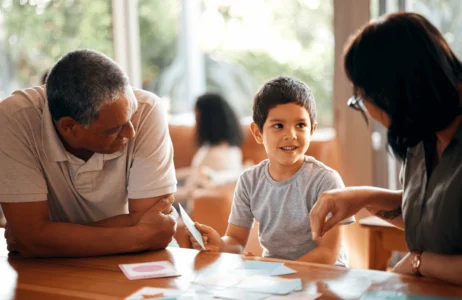
Inviting our kids into conversation and actively listening to what they say validates that their voice matters. The dinner table is an ideal time to talk with each other. A little structure and creativity can transform mealtime chaos into fun for the whole family!
Transforming Chaos to Connection: Creative Conversations
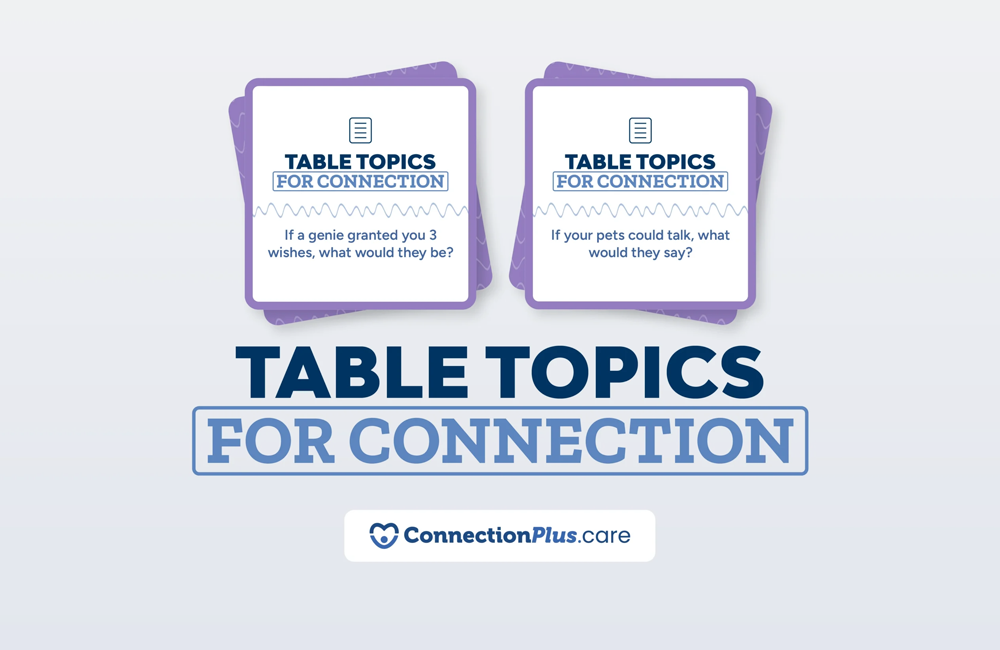
Start by making a list of open-ended questions (steer away from questions with a “yes” or “no” answer) tailored to your children’s ages and interests. Avoid addressing behavioral concerns or sensitive topics around the family dinner table. Instead, create fun, interactive, and creative questions!
Make a conversation jar or basket and load it up with questions your kids can pull from the jar each evening.
Download these table topics to jump-start your family’s dinner chats!
1. Printed Handout and Cheat Sheet tool
2. Open mind and a calm approach to handling sensitive topics
3. Patience to support your child’s learning and skill-building
4. Ongoing conversations that foster connection and trust
[1] Hofferth, Sandra, and John Sandberg, “How American Children Spend Their Time,” Journal of Marriage and Family, March 2, 2004, https://doi.org/10.1111/j.1741-3737.2001.00295.x.

TBRI® Caregiver
Practical, trauma-informed strategies to support children impacted by trauma.
