






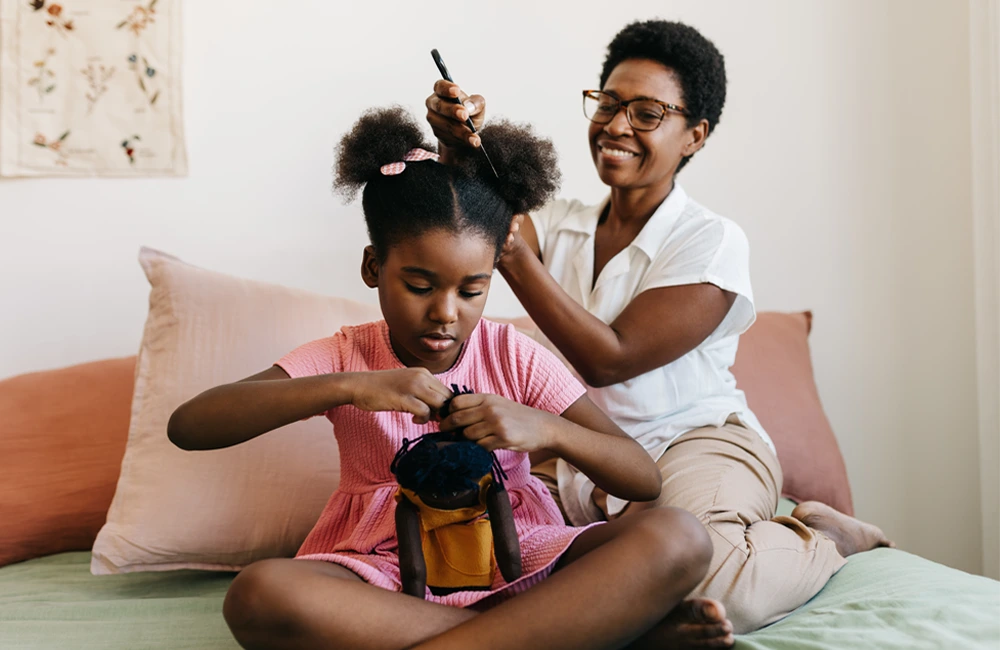
1. Black hair symbolizes resilience and empowerment.
2. The CROWN Act champions hair equality.
3. Moisture is key for Black hair health.
4. Protective styles promote hair health.
This blog is part of our “TBRI® Caregiver” Training. If you would like to learn more about this training or any of other trainings. Click Here.
Black Hair as Legacy: Recognizing
Its History, Meaning, and Strength
As we celebrate Black History Month, it’s crucial to recognize and honor the significance of Black hair care. Far beyond mere aesthetics, Black hair embodies a rich history of resilience, empowerment, and cultural identity. Despite centuries of oppression and discrimination, Black hair stands as a symbol of freedom and pride, representing a rich heritage of strength. Especially within the context of transracial adoption, understanding the history and significance of Black hair and haircare for your child is critical.
Historical Context: Understanding
the Journey of Black Hair
Throughout history, Black hair has faced systematic oppression and discrimination. One poignant example dates back to the 18th century when the governor of Louisiana enacted the Tignon Law, which mandated that Black women conceal their hair in public. Such laws and incidents of discrimination paved the way for the CROWN (Creating a Respectful and Open World for Natural Hair) Act. Enacted in multiple states, including California, Texas, and Tennessee, this legislation prohibits discrimination based on hair texture or style, marking a significant step towards recognizing the dignity and beauty of Black hair.
Why Black Hair Care Matters
Beyond its cultural significance, proper care for Black hair is essential due to its unique characteristics. Black hair comes in various types, with 4A, 4B, and 4C textures being among the most common. Each type requires specific attention and care to maintain its health and vitality. For instance, tighter curls (4B and 4C) demand ample moisture to prevent breakage and promote growth. Brands like “Tgin,” “As I am,” and “Camilla Rose” offer effective moisturizers and deep conditioners tailored to Black hair’s needs. Additionally, natural oils such as Jamaican, jojoba, and coconut oil play a crucial role in locking in moisture and nourishing the hair follicles.
Embracing Protective Styles
Protective styling also plays a pivotal role in Black hair care, offering both practical benefits and stylistic versatility. Box braids, twists, cornrows, and Bantu knots are just a few examples of protective styles that help minimize manipulation and promote hair health. These styles not only reduce maintenance but also aid in length retention and overall hair strength.
Educational Resources for Black Hair Care
Fortunately, there are numerous resources available to educate and empower individuals in caring for Black hair:
- Transracial Parenting Monthly Support Group
- Black Hair Care Tips (Article)
- Hair Love: Jack and Jill of America (Video)
- Teaching Natural Hair (Video)
- Mommies and Curls (Website)
- Styles4Kidz (Website)
If you are parenting or considering parenting a child of a different race than your own, do your homework! Be willing to ask for help from others and seek out professionals of your child’s race to get the support you need to care for your child’s hair with skill and respect.
Black hair care is more than just a routine—it’s a celebration of heritage, resilience, and self-love. By embracing and nurturing Black hair, we honor our child’s roots and empower future generations to love and cherish their natural beauty. This Black History Month, let us continue to elevate the conversation surrounding Black hair care and celebrate its profound cultural significance.
QUICK TIP: Black hair is closely tied to identity, heritage, and cultural strength. If you are caring for a child with different hair needs than your own, take time to learn about Black hair care, including protective styles, the right products, and healthy maintenance. Seek guidance from stylists and community members who specialize in Black hair to ensure informed and respectful care.