






Empowering Caregivers with Coaching and Training Services.

Need Support? Speak with an Intake Specialist Today

Feeling overwhelmed? Meredith, our Intake Specialist, is here to help. Reach out today.

Get Trauma-Informed Training From Anywhere

Experience Trauma-informed
tools from anywhere.

Why Kids with Problematic Sexual Behavior Aren’t ‘Bad’—And Why That Matters
Connecting with Teens through Shared Journaling
5 Trauma-Informed Parenting Hacks That Work
Understanding Childhood Sexual Development: A Shame-Free Guide for Parents
From Bathtime to Big Talks: Everyday Ways to Teach Kids About Their Bodies
From Burnout to Connection: Using Points of Joy to Overcome Blocked Care

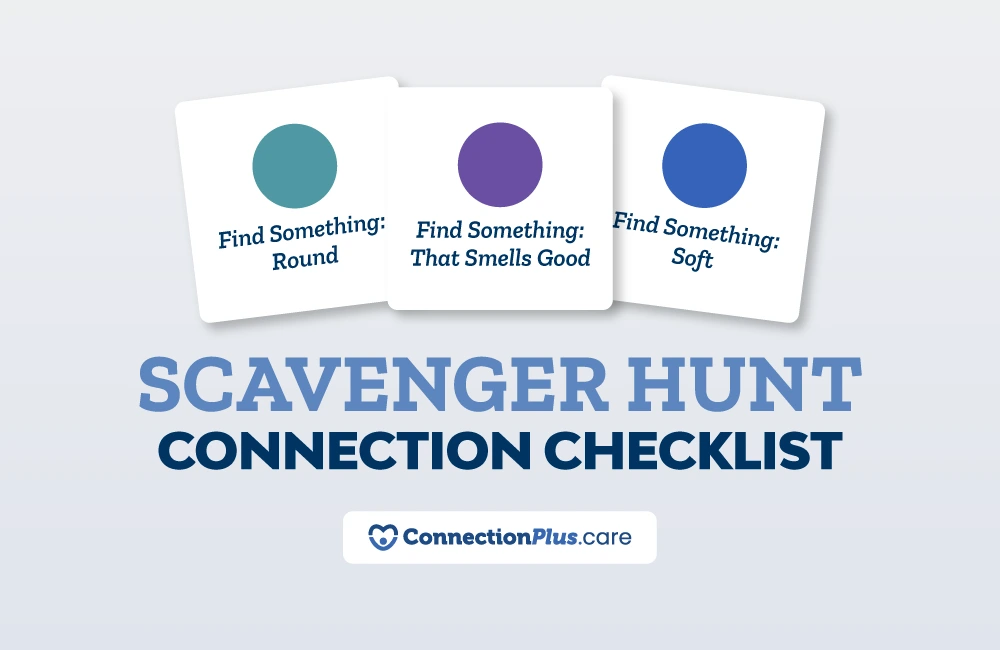
Scavenger Hunt Connection Checklist

Graphic titled ‘Scavenger Hunt Connection Checklist’ featuring three cards. The cards display colored circles and text reading: ‘Find Something: Round,’ ‘Find Something: That Smells Good,’ and ‘Find Something: Soft.’ A ConnectionPlus.care logo appears at the bottom.

KEY TAKEAWAYS

1.  Turn shared play into a meaningful connection.

2. Engagement builds communication and reflection.

3. Intentional, tech-free time supports secure relationships.

This blog is part of our “TBRI® Caregiver” Training. If you would like to learn more about this training or any of other trainings. Click Here.

Why Simple Play Creates Meaningful Connection

Sometimes the most meaningful connection happens during the simplest moments. A scavenger hunt may look like play on the surface, but shared activities like this create natural opportunities for conversation, laughter, teamwork, and emotional connection. For children and teens, especially those who may struggle with direct conversation, movement and shared focus can make interaction feel easier and more relaxed.

Kick Off the Adventure With Our Free Scavenger Hunt Printable

Use our free printable scavenger hunt checklist and let the fun begin! This is perfect for inside or the backyard, for younger and older kids alike. After the hunt is over, enjoy a snack together, open your bags to see what everyone collected, and talk about the experience:

1. What did you like about the scavenger hunt?


2. What else did you see or find?


3. What was something unexpected you saw?

1.   Pencil and printed handout


2.  Pencils or crayons to mark what you find


3.  Dedicated time (parents, stow your phones!

TBRI® Caregiver

Practical, trauma-informed strategies to support children impacted by trauma.

Connecting with teens can feel tough. Video games, earbuds, and social media often command their attention, and one-word answers can leave caregivers wondering, What are they thinking? What are they feeling? Do they even care? Some teens keep their emotions tightly guarded, while others huff, puff, and stomp away when parents try to enter their world.

When it feels like the door is closing, shared journaling can offer another way in. This simple practicebuilds relationship without forcing conversation. It allows teens to express how they feel at their own pace, in their own words, and without the pressure of face-to-face interaction or nonverbal cues that can sometimes create barriers.

What Shared Journaling Can Look Like at Home

In one family, shared journaling became a simple weekly rhythm. A parent and their daughters took turns answering questions in a journal, leaving it on one another’s pillow each week. Over time, this small practice opened a window into the girls’ hearts—their hopes and dreams, friendships, interests, and struggles. 

The journal also became a space for the children to learn more about their parent as a teen and young adult, often discovering unexpected things they had in common. What mattered most wasn’t writing something wise or perfectly worded. The connection came from open-ended prompts and a willingness to listen without correcting, fixing, or lecturing. 

Why Kids with Problematic Sexual Behavior Aren’t ‘Bad’—And Why That Matters

Trauma and Adolescence

ConnectionPlus is here to help your family not just survive the holiday season, but thrive in it.

LOOKING FOR MORE SUPPORT?

Explore our resource library for practical tools and guidance for families impacted by trauma. If you’re interested in diving deeper, check out our upcoming trainings. And if your family needs parent coaching, we’re here to help every step of the way.