






Empowering Caregivers with Coaching and Training Services.

Need Support? Speak with an Intake Specialist Today

Feeling overwhelmed? Meredith, our Intake Specialist, is here to help. Reach out today.

Get Trauma-Informed Training From Anywhere

Experience Trauma-informed
tools from anywhere.

Why Kids with Problematic Sexual Behavior Aren’t ‘Bad’—And Why That Matters
Connecting with Teens through Shared Journaling
5 Trauma-Informed Parenting Hacks That Work
Understanding Childhood Sexual Development: A Shame-Free Guide for Parents
From Bathtime to Big Talks: Everyday Ways to Teach Kids About Their Bodies
From Burnout to Connection: Using Points of Joy to Overcome Blocked Care

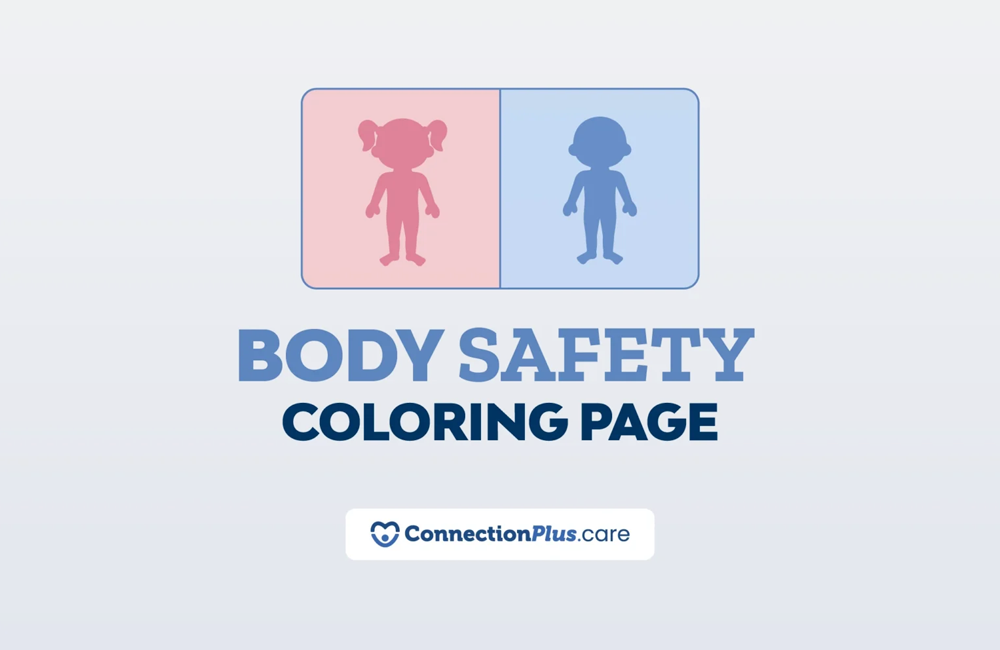
Body Safety Coloring Page

Body Safety Coloring Page graphic with pink and blue child silhouettes and the ConnectionPlus.care logo on a light gradient background.

KEY TAKEAWAYS

1. Simple activities can teach powerful body safety rules. 

2. Identifying trusted adults increases protection and confidence.

3. Open conversations reinforce respect and self-advocacy.

This resource is part of “Displacing Shame: Addressing Problematic Sexual Behavior ”  Training. If you would like to learn more about this training or any of other trainings. Click Here.

Cultivating Body Safety: A Coloring Page Activity for Children

Empowering children with a strong sense of body safety, personal boundaries, and privacy is crucial for their protection and confidence. Providing them with an understanding of appropriate and inappropriate behavior, along with fostering open conversations about bodies, respect, and trusted adults, helps children navigate the world safely. This simple yet impactful coloring activity guides them in recognizing boundaries and practicing self-advocacy in a supportive, interactive way.

Instructions: Encourage your child to color clothes or a bathing suit over the private parts on the coloring page. This simple act teaches privacy rules and creates the basis for a comfortable discussion of body boundaries.

Trust Circles: Have your child write the names of trusted individuals around the girl/boy in the circles. Encourage them to think of relatives, teachers, or family friends they can confide in. By identifying safe adults, we empower them to know that they have the right to speak up for themselves, no matter who is hurting them.

Mutual Respect and Support: Discuss the importance of respecting others’ body boundaries and supporting those who confide in them about feeling uncomfortable or unsafe.

Creating a Safe Environment: Reassure your child that their feelings and boundaries are respected. Let them know they can always approach trusted adults with concerns or questions about body safety.

Use this tool and conversation to empower your child to recognize and assert their boundaries while fostering open communication and trust. Let’s equip our children with the tools they need to help prevent abuse and navigate the world confidently.

1.   Pencil and printed handout


2.  Coloring utensils and a safe space


3.  Open hearts and listening ears

Displacing Shame: Healing by Connection

Learn to identify, understand, and respond to problematic sexual behavior in children.

Connecting with teens can feel tough. Video games, earbuds, and social media often command their attention, and one-word answers can leave caregivers wondering, What are they thinking? What are they feeling? Do they even care? Some teens keep their emotions tightly guarded, while others huff, puff, and stomp away when parents try to enter their world.

When it feels like the door is closing, shared journaling can offer another way in. This simple practicebuilds relationship without forcing conversation. It allows teens to express how they feel at their own pace, in their own words, and without the pressure of face-to-face interaction or nonverbal cues that can sometimes create barriers.

What Shared Journaling Can Look Like at Home

In one family, shared journaling became a simple weekly rhythm. A parent and their daughters took turns answering questions in a journal, leaving it on one another’s pillow each week. Over time, this small practice opened a window into the girls’ hearts—their hopes and dreams, friendships, interests, and struggles. 

The journal also became a space for the children to learn more about their parent as a teen and young adult, often discovering unexpected things they had in common. What mattered most wasn’t writing something wise or perfectly worded. The connection came from open-ended prompts and a willingness to listen without correcting, fixing, or lecturing. 

Why Kids with Problematic Sexual Behavior Aren’t ‘Bad’—And Why That Matters

Trauma and Adolescence

ConnectionPlus is here to help your family not just survive the holiday season, but thrive in it.

LOOKING FOR MORE SUPPORT?

Explore our resource library for practical tools and guidance for families impacted by trauma. If you’re interested in diving deeper, check out our upcoming trainings. And if your family needs parent coaching, we’re here to help every step of the way.